
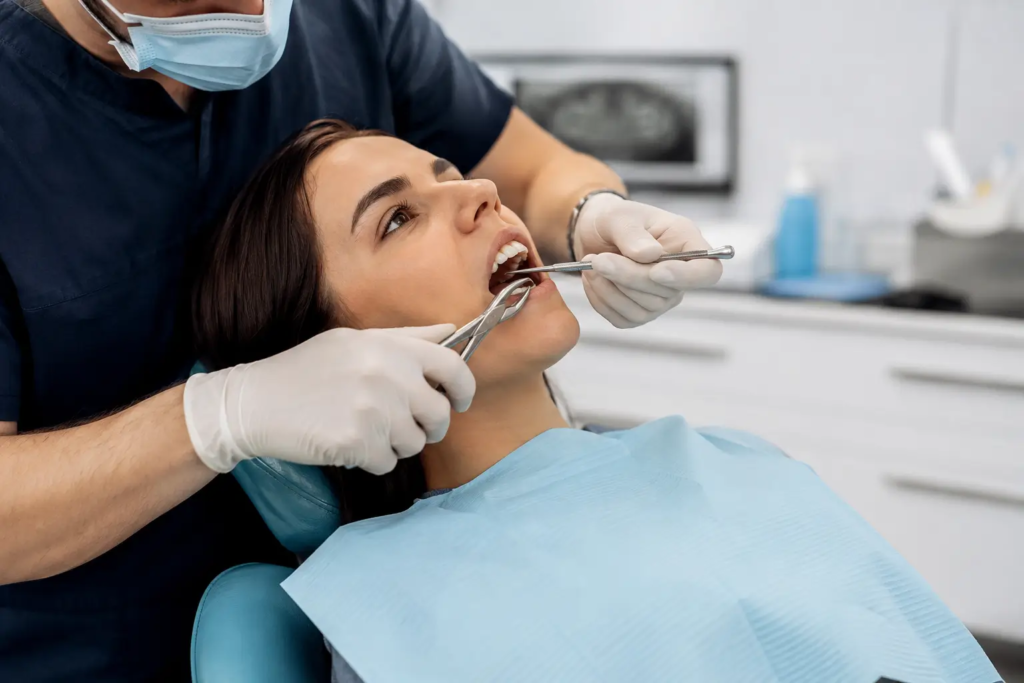
For decades, the conventional wisdom about wisdom teeth was simple: everyone should have them removed, ideally in the late teens or early twenties, whether or not they were causing any problem. Many people still arrive at our offices expecting exactly that recommendation. The reality, however, is more nuanced, and the current evidence supports a more individualized approach than the old blanket rule suggested.
Some wisdom teeth genuinely need to come out, and delaying their removal can lead to pain, infection, damage to neighboring teeth or other more serious insult. Other wisdom teeth, particularly those that have fully erupted into a healthy position and can be cleaned properly, may not need to be touched at all. The right decision depends on your specific anatomy, the position of the teeth, and what the imaging reveals, rather than on a one-size-fits-all policy.
This guide walks through how that decision is actually made, what the extraction procedure involves when it is needed, what recovery realistically looks like, and what it tends to cost in Miami. Throughout, our aim is to give you a clear and honest picture, consistent with the conservation-first philosophy that guides everything we do, we recommend removing a tooth when there is a sound clinical reason, and we are equally willing to recommend watching and waiting when that is the wiser choice.
The honest headline: not every wisdom tooth needs to be removed. The decision should rest on the position of the tooth, whether it can be kept clean, and what a three-dimensional scan reveals about the surrounding structures, rather than on age alone or on a default assumption that all four must come out.
Not every wisdom tooth needs to come out: the honest clinical answer
Wisdom teeth, known clinically as third molars, are the last teeth to develop, typically emerging between the ages of seventeen and twenty-five. The fundamental issue with them is one of space. The human jaw has gradually become smaller over evolutionary time, and for many people there is simply not enough room at the back of the arch for these final molars to erupt into a useful, cleanable position. When that happens, problems can follow. When it does not, the teeth may function perfectly well for a lifetime.
The clinical decision, therefore, comes down to a careful assessment of whether a given wisdom tooth is currently causing a problem, is likely to cause one in the future, or is sitting in a stable and healthy position that justifies leaving it alone. Each of those three scenarios points toward a different recommendation.
When extraction is clearly indicated
Certain situations make removal the clear and well-supported choice. The most common is pericoronitis, a localized infection of the gum tissue surrounding a partially erupted wisdom tooth. When a tooth breaks only partway through the gum, it creates a flap of tissue under which bacteria and food debris accumulate, leading to recurrent swelling, pain, and difficulty opening the mouth or swallowing. Pericoronitis tends to recur, and once it becomes a pattern, removing the tooth is usually the definitive solution.
Extraction is also clearly indicated when a wisdom tooth is decayed beyond reasonable repair, when it is damaging the tooth directly in front of it, or when it is associated with a cyst or other pathology in the jaw. Impacted wisdom teeth, those trapped beneath the gum or bone, can in rare cases give rise to fluid-filled cysts that slowly expand and erode the surrounding bone. While these complications are uncommon, they are serious when they occur, and they are precisely the kind of problem that imaging is designed to detect early.
A further common scenario involves a wisdom tooth pressing against the second molar in front of it. When there is inadequate room to clean between the two, that neighboring molar becomes vulnerable to decay and gum disease on its back surface, an area that is nearly impossible to reach with a toothbrush. In such cases, removing the wisdom tooth protects the far more valuable second molar, which is a tooth genuinely worth preserving.
When monitoring is the better choice
Just as there are clear reasons to remove, there are equally valid reasons to leave a wisdom tooth in place. A wisdom tooth that has fully erupted into a functional position, bites properly against its opposing tooth, and can be brushed and flossed like any other molar may not need removal at all. In these cases, the tooth is simply another working molar, and extracting a healthy, functional tooth would run counter to the principle of preserving natural structure whenever possible.
Monitoring is also frequently the more sensible path for wisdom teeth that are completely impacted in bone, fully covered, and showing no signs of disease or pressure on neighboring structures, particularly in older adults. The reasoning here is important. In an older patient with deeply impacted but entirely asymptomatic teeth, the surgical risk and recovery burden of removal may outweigh the small likelihood of future trouble. In such situations, periodic observation with imaging, intervening only if a problem actually develops, is a defensible and often preferable strategy.
The key point is that monitoring is not the same as ignoring. It means scheduling regular evaluations, watching for early signs of change, and keeping the option of removal available if the situation shift. This kind of attentive, conservative oversight is exactly what a thoughtful dental relationship is for.
The preventive removal debate: what the evidence actually shows
The most contested question in this area is whether asymptomatic wisdom teeth, those causing no current symptoms, should be removed as a preventive measure. The traditional argument in favor holds that problems become more likely and more difficult to treat with age, since the roots lengthen and the surrounding bone becomes denser over time. There is genuine truth to this: extractions performed in the late teens and early twenties generally heal faster, more predictably, and with fewer complications than the same procedures performed decades later.
At the same time, the research community has increasingly questioned the practice of routinely removing every asymptomatic wisdom tooth, recognizing that a meaningful proportion of these teeth would never have caused trouble. The honest position, and the one we hold, is that this is a genuine judgment call that should be made individually. For a young patient whose imaging shows a wisdom tooth on a clear trajectory toward impaction and future problems, early removal is often the prudent choice. For someone whose wisdom teeth are stable, healthy, and cleanable, watchful monitoring may serve them better. What matters is that the decision is reasoned and personalized, rather than automatic.
Types of wisdom tooth impaction, and why classification matters
When a wisdom tooth cannot fully erupt into its functional position, it is described as impacted. Impaction is not a single condition, however. Oral surgeons classify it along several axes at once, and the specific combination has a direct bearing on whether extraction is advisable, how the procedure is approached, and how complex and costly it is likely to be. Understanding this classification helps explain why two people can receive very different recommendations and very different estimates for what sounds, on the surface, like the same procedure.
Soft tissue, partial bony, and full bony impaction
The first axis of classification describes how much hard and soft tissue covers the tooth, which largely determines the surgical effort involved. In a soft tissue impaction, the crown has cleared the bone but remains partly covered by gingiva, leaving a flap of tissue known as an operculum. Food and bacteria collect beneath that operculum, which is the typical setting for the recurrent inflammation called pericoronitis. In a partial bony impaction, the tooth has erupted only partway and a portion of the crown remains below the level of the surrounding bone, so the tooth cannot function or be cleaned and usually requires removal of some overlying bone for access. In a full bony impaction, the tooth is entirely encased within the jawbone, which represents the most surgically demanding scenario and frequently requires raising a flap, removing bone, and sectioning the tooth.
The second axis is angulation, which describes the direction the tooth is tilted relative to the second molar and the arch. Dentists generally describe four patterns. A mesioangular impaction, angled forward toward the front of the mouth, is the most common pattern and tends to press on the second molar; it is also, somewhat counterintuitively, often among the more straightforward to remove. A horizontal impaction lies on its side, perpendicular to the second molar, almost always requires removal because it cannot erupt and routinely damages its neighbor, and is considered one of the more difficult extractions. A vertical impaction sits upright in a near-normal orientation and, depending on space and depth, may occasionally erupt usefully or at least be removed more simply. A distoangular impaction is tilted backward toward the rear of the jaw and is generally regarded as the most challenging of the four to extract, because the path of removal works against the ramus of the mandible.
The third axis is depth, meaning how far the tooth sits below the occlusal plane and the surrounding bone. A deeper position increases both the surgical complexity and the proximity to nearby anatomical structures. Taken together, these three dimensions, tissue coverage, angulation, and depth, are what allow a clinician to anticipate the difficulty of a given extraction before any instrument touches the tooth, and they are precisely why an accurate assessment beforehand matters so much.
Why a CBCT scan matters before any wisdom tooth surgery
A standard panoramic radiograph provides a useful two-dimensional overview of the wisdom teeth, their angulation, and their general relationship to surrounding structures. For many straightforward cases, that is sufficient. For more complex situations, however, a cone beam CT scan, or CBCT, provides volumetric three-dimensional information that a flat image cannot, and at D&FD we rely on it whenever the anatomy warrants closer examination.
The single most important reason for three-dimensional imaging concerns the inferior alveolar nerve, which travels through the mandibular canal and supplies sensation to the lower lip, chin, and teeth. When the roots of a lower wisdom tooth lie close to or appear to overlap this canal on a panoramic film, that two-dimensional image cannot reveal whether the roots are merely near the nerve or genuinely in contact with it, nor on which side. A CBCT resolves that ambiguity by showing the true spatial relationship between the root tips and the canal, including whether the canal is displaced or grooved by the roots. This directly informs the risk of temporary or, in rare cases, lasting altered sensation, a complication clinically termed paresthesia, and it allows the surgical approach to be planned to protect the nerve, including techniques such as deliberate sectioning of the tooth to avoid pressure on the canal.
For upper wisdom teeth, the same imaging clarifies the relationship to the maxillary sinus, whose floor often sits just above the roots. Knowing whether a root is in close contact with, or projecting into, the sinus floor helps anticipate and reduce the risk of an oroantral communication, an unintended opening between the mouth and the sinus, during removal. Beyond the nerve and the sinus, a CBCT also characterizes root morphology, such as the number, curvature, and fusion of roots, and the density of the surrounding bone, both of which shape how the tooth will be removed. This level of pre-surgical planning is what allows the procedure to be carried out deliberately and safely, rather than relying on guesswork once surgery is already underway.
What the extraction procedure actually involves
Once a decision to remove a wisdom tooth has been made, understanding what the procedure involves removes much of the anxiety that surrounds it. The experience varies considerably depending on whether the tooth has fully erupted or is impacted, but the general principles are consistent and the process is well established.
Local anesthesia, sedation, or general: what is right for your case
The choice of anesthesia depends on the complexity of the extraction and on your own comfort and preferences. For a simple extraction of a fully erupted wisdom tooth, local anesthesia alone, the same numbing used for a filling, is often entirely sufficient, and you remain fully awake and aware throughout. For more involved surgical extractions, or for patients who experience significant anxiety, intravenous sedation can keep you deeply relaxed and largely unaware of the procedure while still breathing on your own. General anesthesia is reserved for the most complex cases or for the removal of all four teeth at once when that approach is chosen.
There is no single correct answer here, and the right option is the one that matches the surgical complexity and lets you feel comfortable. This is part of the conversation we have before surgery, so that you understand the choices and can decide alongside your dentist rather than having a default imposed on you.
Simple versus surgical extraction: what changes
A simple extraction applies to a wisdom tooth that has fully erupted and is accessible, much like removing any other tooth. After thorough numbing, the tooth is gently loosened and lifted from its socket, a process that is usually quick and straightforward. A surgical extraction, by contrast, is required when a tooth is impacted beneath gum or bone. In this case, a small incision is made in the gum to expose the tooth, a portion of the overlying bone may be removed to gain access, and the tooth is sometimes sectioned into pieces to allow removal through a smaller opening. The site is then cleaned and closed with sutures, which are often dissolvable.
This distinction explains why estimates and recovery expectations differ so widely. A simple extraction is a brief, minor procedure with a short recovery, whereas a full bony impaction is genuine oral surgery with a correspondingly more involved healing period. Knowing which category your case falls into, something the imaging and examination determine, sets realistic expectations from the outset.
How long the procedure takes
Timing depends heavily on complexity. The removal of a single, accessible wisdom tooth can often be completed in twenty to forty-five minutes. A more difficult impacted extraction may take closer to an hour, and removing all four wisdom teeth in a single appointment, a common approach, naturally extends the total time further. These are general ranges rather than guarantees, since every case is different, but they provide a useful frame for planning your day and arranging for someone to drive you home if sedation is used.
Recovery: the first 72 hours, the first week, and full healing
Recovery is the part of the process people worry about most, and clear information makes it far more manageable. For most patients, the bulk of the discomfort resolves within the first several days, and the experience is considerably more tolerable than the anxiety beforehand tends to suggest.
What to eat, avoid, and watch for in the first 24 to 48 hours
In the first day or two, the priorities are protecting the surgical site and managing swelling. Soft, cool foods such as yogurt, smoothies, soup that is not too hot, and mashed vegetables are ideal, and you should avoid chewing directly over the extraction sites. Applying an ice pack to the outside of the cheek in intervals during the first day helps control swelling, which typically peaks around the second or third day before steadily improving. Most discomfort is well managed with over-the-counter pain relievers, and many patients find they need nothing stronger.
Equally important is what to avoid. For the first several days, you should not use straws, rinse forcefully, smoke, or spit vigorously, because each of these creates suction or pressure that can dislodge the protective blood clot forming in the socket. Gentle warm salt water rinses, beginning about twenty-four hours after surgery, help keep the area clean without disturbing healing.
Dry socket: why it happens and how to prevent it
The complication patients ask about most is dry socket, known clinically as alveolar osteitis. It occurs when the blood clot that normally forms and protects the extraction site is dislodged or fails to develop, leaving the underlying bone and nerve endings exposed. The result is a distinctive throbbing pain, often radiating toward the ear, that typically appears a few days after surgery rather than immediately. While dry socket is not dangerous, it is genuinely uncomfortable and delays healing.
Prevention centers on protecting that clot, which is why the guidance to avoid straws, smoking, and forceful rinsing matters so much. Following the post-operative instructions carefully is the single most effective way to reduce the risk. Should dry socket develop despite precautions, it is readily treatable: a dentist can clean the site and place a soothing medicated dressing that relieves the pain and supports healing, so it is always worth calling rather than enduring the discomfort.
How PRF accelerates wisdom tooth recovery at D&FD
One of the ways we work to make recovery smoother and more predictable is through the use of PRF, or platelet-rich fibrin. PRF is a biological material prepared from a small sample of your own blood, drawn at the time of the procedure and spun in a centrifuge to concentrate the platelets and growth factors that drive natural healing. The resulting fibrin membrane is then placed directly into the extraction socket.
For wisdom tooth extractions, this offers a meaningful benefit. Because PRF is derived entirely from your own blood, it carries no risk of rejection or allergic reaction, and it provides a biologically active scaffold that supports faster soft tissue healing and helps stabilize the protective clot. Studies examining PRF in extraction sites have reported reductions in the incidence of dry socket and improvements in the consistency of healing compared with sites treated without it. For complex surgical extractions in particular, where the healing burden is greater, this is a genuine advantage, and it reflects the same regenerative protocols we apply across our surgical care.
PRF is prepared from your own blood on the day of surgery and adds only a few minutes to the appointment. For complex extractions, it supports faster, more predictable healing and helps reduce the risk of dry socket, which is why we routinely incorporate it where it is clinically beneficial.
Wisdom teeth extraction costs in Miami, and when to book
Cost naturally plays a role in the decision, especially when patients are unsure whether they need one wisdom tooth removed or all four. In the Miami area, wisdom teeth extraction can vary widely depending on how the tooth is positioned, whether it has fully erupted, and whether sedation is recommended. As a general planning range, a simple erupted wisdom tooth extraction may fall around $150 to $400 per tooth, while surgical or impacted wisdom tooth removal may range from $300 to $700 per tooth, and more complex bony impactions can reach $500 to $1,100 or more per tooth.
| Type of wisdom tooth extraction | Reasonable Miami/Florida planning range |
| Simple erupted wisdom tooth extraction | $150 to $400 per tooth |
| Surgical or partially impacted extraction | $300 to $700 per tooth |
| Partial or full bony impaction | $500 to $1,100+ per tooth |
| Sedation, if needed | About $50 to $800+ extra, depending on the type |
That range is not meant to replace a clinical estimate, but it does help patients understand why prices are not the same for every case. A wisdom tooth that has already come through the gums is usually easier to remove than one trapped under gum tissue or bone. Likewise, removing one tooth with local anesthesia is very different from removing multiple impacted teeth with sedation. Because of that, the most accurate way to understand your cost is to schedule an exam and imaging first.
What Affects the Price, and What Insurance Typically Covers
The biggest pricing factor is complexity. A simple extraction of a fully erupted wisdom tooth sits at the lower end of the range, while an impacted tooth that requires surgical access, sectioning, or bone removal sits higher. The number of teeth being removed, the type of anesthesia used, and whether panoramic X-rays or 3D imaging are needed can also influence the final estimate. Sedation, when recommended, may add to the total cost depending on whether the patient uses nitrous oxide, oral sedation, IV sedation, or another option.
Dental insurance may help reduce out-of-pocket costs when wisdom tooth removal is considered medically necessary. This is often the case when a wisdom tooth is impacted, painful, infected, damaging a nearby tooth, difficult to clean, or creating other oral health concerns. Coverage varies by plan, but many dental insurance plans may cover a meaningful portion of the procedure after deductibles, coinsurance, annual maximums, and network rules are applied.
At both of our locations, we provide transparent, itemized estimates before treatment begins. That means patients can see what is included, what their insurance may cover, and what their expected out-of-pocket cost may be before moving forward.
Symptoms that warrant a prompt appointment
Certain symptoms should not wait for a routine visit. Persistent or worsening pain at the back of the mouth, swelling of the gum or jaw, recurrent infections around a partially erupted tooth, difficulty opening the mouth, or a bad taste and odor that does not resolve are all signs that a wisdom tooth needs prompt evaluation. These often indicate pericoronitis or another active problem that tends to worsen rather than improve on its own.
If you are experiencing any of these, the sensible step is to schedule an examination so that the situation can be assessed before it escalates. Early evaluation also preserves the full range of options, since a problem caught early is almost always easier to manage than one that has been allowed to progress.
Whether you are dealing with active discomfort or simply want a clear answer about whether your wisdom teeth need attention, book an evaluation at Gables Dental Care in Coral Gables or EliteDent in Kendall. We will take the appropriate imaging, explain exactly what we see, and give you an honest recommendation, whether that is removal, monitoring, or simple reassurance that your wisdom teeth are fine as they are.
Our promise is consistency with how we practice across the board: we recommend extraction when there is a genuine clinical reason, and we are just as willing to tell you that watching and waiting is the better path. You will always leave knowing where you stand and why.