Here is something most people do not know about dental care: the majority of fillings placed every year in the United States are not new fillings. They are replacements. Roughly six out of every ten restorative procedures a dentist performs involve removing an old restoration, not placing a first one. That single fact is worth sitting with for a moment, because it reveals something important about how dentistry works in practice and why the decisions made early in a tooth’s life matter so much in the long run.
Conservative dentistry is the clinical philosophy built around that understanding. At its core, it holds that natural tooth structure is irreplaceable, that every intervention leaves a tooth somewhat different from how it started, and that the best outcome for any patient over decades of care is usually achieved by doing precisely as much as the situation requires and nothing beyond that. This is not a passive or minimalist approach. It is an active commitment to preserving what works, treating what genuinely needs treatment, and resisting the pull toward intervention simply because intervention is possible.
At D&FD, this philosophy runs through how we approach routine care, complex cases, and cosmetic treatment alike. It shapes not only what we recommend, but why, and it is the foundation of the kind of care that serves patients well not just at a single appointment but across the full arc of their oral health.
What conservative dentistry actually means in practice
The phrase can sound abstract, so it helps to translate it into the kind of decisions it governs. Conservative dentistry is most visible in three recurring clinical judgments: whether to treat or monitor a developing problem, how extensively to prepare a tooth when treatment is needed, and when a repair or smaller restoration can do the job instead of a larger one. Each of those choices, made well or poorly, adds up to something significant over time.
Consider what happens with a small cavity. In an earlier era of dentistry, the standard approach was to drill well beyond the decay itself in order to create a mechanical tooth preparation that would hold a filling in place. Healthy tooth structure was routinely sacrificed for retention. Modern adhesive dentistry has made that unnecessary. Contemporary bonded materials attach micromechanical and chemically to the tooth surface, so the preparation can follow the natural contours of the decay without extending into sound tissue. The result is a smaller cavity, a smaller filling, a better-adapted margin, and a tooth that is stronger afterward because more of it remains intact.
That same principle scales across everything from a simple filling to a crown to a decision about whether to save or extract a tooth. The question is always: what is the least I can do that will predictably solve this problem and give this tooth its best possible future? That question takes more clinical thought than defaulting to the most aggressive option, and it takes more honest conversation with the patient, but it consistently produces better long-term outcomes.
Conservative care is not about doing less. It is about doing the right amount with precision. A patient who has two small, well-placed fillings over thirty years has received more conservative care than one who has had the same tooth worked on repeatedly, regardless of which dentist charged less per visit.
The restorative cycle: why the first intervention matters most
There is a concept in dentistry worth knowing about, because it changes how you think about the care you receive over a lifetime. Dentists sometimes call it the restorative cycle, and it describes something straightforward: once a tooth is restored, it will likely need attention again at some point in the future. The key variable is not whether that happens, but when, and how much healthy tooth structure remains at each stage.
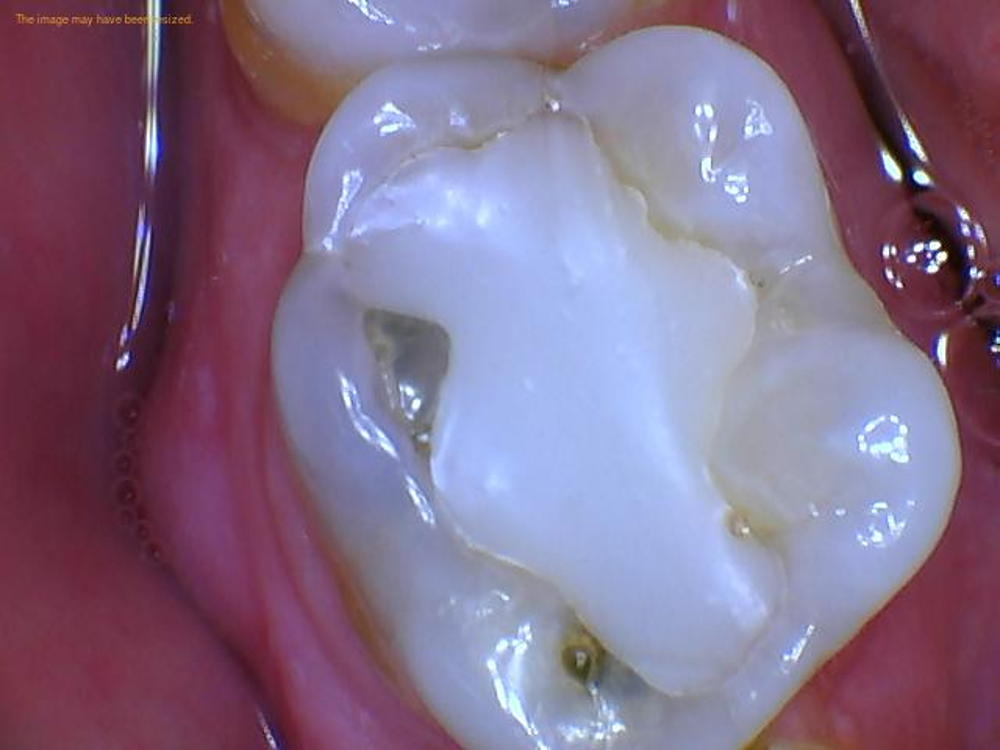
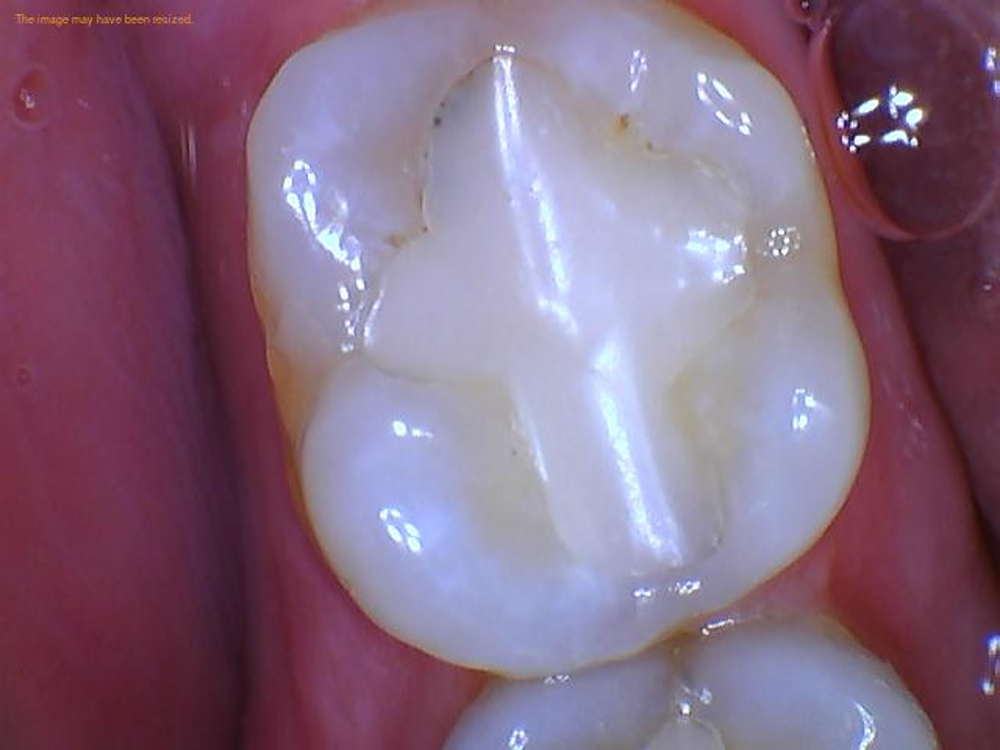
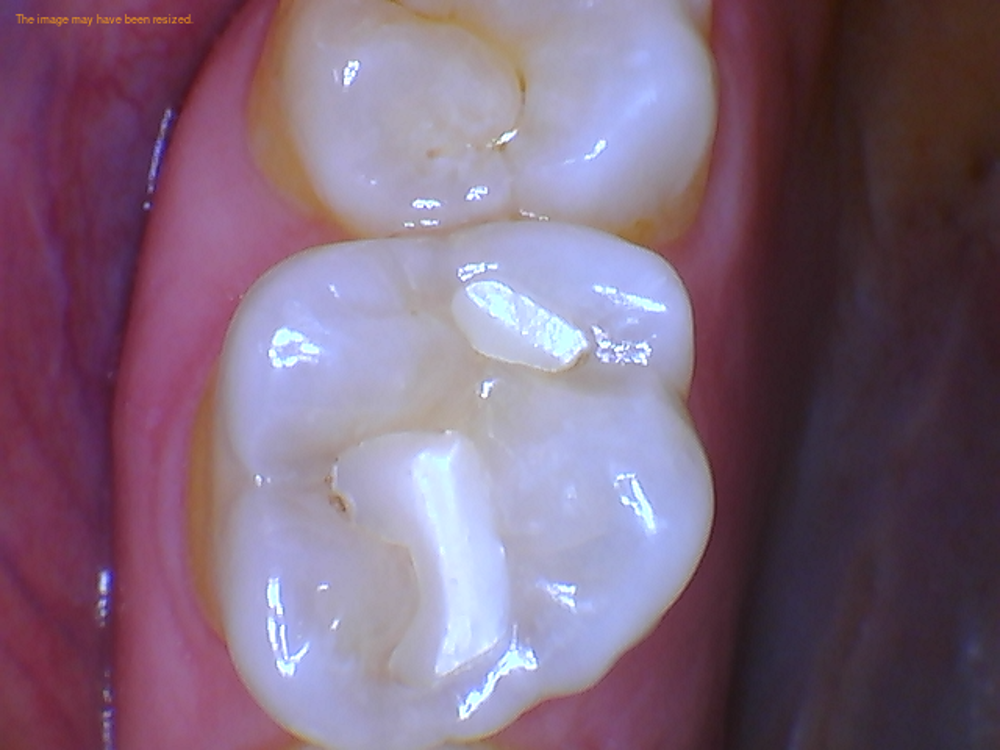
A well-placed composite filling can serve a tooth well, but how long it lasts depends on far more than the filling itself. Patient-specific factors, such as bruxism, missing adjacent or opposing teeth, and the condition of neighboring restorations, all shape the outcome. So does the size of the restoration, and two things tend to work against a long lifespan there. First, many patients are not willing to pay for the ideal treatment (a ceramic inlay or onlay) but still expect a composite filling to look perfect and hold up indefinitely. Second, when a restoration ends up larger than expected (something that is not always predictable until the decay has actually been removed), the material itself becomes the limiting factor. Composite resin has a different rate of thermal expansion than natural tooth structure, so as temperatures change day to day, the filling and the tooth expand and contract at different rates. Over time this opens a small gap at the margin, which is exactly where new decay tends to start.
When a filling does need replacement, the preparation is usually slightly larger than the original. How long that replacement lasts is governed by the same variables as the first restoration, its size, the materials involved, and the patient’s own risk factors, rather than by the material alone.
Eventually, if enough of the natural tooth has been consumed by successive restorations, a crown becomes the appropriate solution. A crown can protect a tooth for 15 to 20 years, but that range is not determined by workmanship alone. A precisely made crown puts the tooth in the best possible starting position, but the mouth is an active, often aggressive environment, and the patient’s daily hygiene habits play a role that can be just as decisive, sometimes more so, in how long a fixed restoration actually lasts. A root canal, if ever needed, extends the useful life of the tooth further still. At every stage, there are real, measurable years to be gained from precise, well-executed care, paired with the habits that protect it afterward.
What conservative dentistry does is maximize the time between each of those stages. The reason is mechanical: a smaller, well-performed preparation leaves more and stronger natural tooth structure in place, which means the margins are better adapted, bacteria have fewer pathways in, and the restoration holds longer before needing attention. Secondary caries, which is new decay forming at the margin of an existing restoration, is the leading reason fillings fail. A well-fitted, minimally sized restoration simply gives it less opportunity to take hold. In time, that difference becomes visible. It is the difference between a tooth that has been worked on twice and one that has been worked on five times.
The goal, in other words, is not to avoid treatment. It is to make sure that every intervention you do need buys you the maximum possible time before the next one becomes necessary, and to support that time with the everyday habits that keep the mouth working in the restoration’s favor rather than against it. A tooth treated conservatively at each stage, and cared for consistently at home, can remain functional, healthy, and largely intact for a long time. That is not a theoretical ideal. It is what good dentistry, done precisely from the beginning, actually looks like in practice.
When monitoring beats treating: the case for watchful waiting
One of the most genuinely conservative decisions a dentist can make is to recommend monitoring rather than immediate treatment. Not every lesion that appears on an X-ray requires an immediate filling. Early enamel demineralization, for example, can sometimes be halted or even partially reversed through improved hygiene, fluoride application, and dietary adjustments. A cavity that has not yet broken through the enamel surface may be stable enough to watch carefully rather than drill.
This kind of recommendation takes clinical confidence, because it requires explaining to a patient why you are recommending they come back in six months rather than scheduling a filling today. It is not the path of least resistance, and it is not the easiest recommendation to make. But when watchful waiting is appropriate, it keeps a tooth out of the restorative cycle for longer, and that is always worth pursuing when the clinical situation supports it.
The flip side is equally important. When a lesion has crossed the threshold where monitoring is no longer sufficient, timely treatment prevents it from progressing further. Watchful waiting is not the same as doing nothing, and a conservative dentist knows exactly when the balance tips from one to the other.
How this applies to cosmetic dentistry, and why the two are not opposites
Cosmetic dentistry and conservative dentistry are not opposites, but they do create real trade-offs that are worth understanding before any treatment begins. The most useful way to understand those trade-offs is to think about what happens to the tooth structure in each scenario, because the difference is more significant than most people realize.
Take a patient who wants to improve the color and shape of their front teeth. One path is whitening combined with direct composite bonding, which corrects minor shape irregularities by adding material to the tooth surface. The natural tooth is not touched. Another path is minimal-preparation veneers, thin porcelain shells that require removing roughly 0.3 to 0.5 millimeters of enamel from the front surface of each tooth. A third path is full porcelain crowns, which require reducing the tooth by approximately 1.5 to 2 millimeters all the way around, including the biting edge and the back surface. All three can produce a beautiful result in the right hands. What they do to the underlying tooth is completely different.
That gap matters because enamel does not grow back. A tooth that has been reduced for a crown has permanently lost structure it can never recover. If that crown eventually needs replacement, the next one starts from a smaller foundation. By contrast, a tooth that was treated with bonding or a minimal-prep veneer retains most of its natural structure and has more options available to it in the future if anything ever needs to be revised.
None of this means that crowns are wrong and bonding is always right. There are teeth that genuinely need the protection a crown provides, just as there are smile goals that bonding simply cannot achieve. The point is that the choice between these options is not only about the aesthetic result today. It is also about what the tooth looks like in 10 or 20 years, and that part of the conversation is just as important as the before-and-after photos.
At D&FD, cosmetic treatment planning begins with that broader view. We do both: conservative restorative care and cosmetic dentistry, and we approach the cosmetic side with the same question we ask about everything else. What achieves the goal the patient is looking for while preserving as much of what they already have as the situation allows? Sometimes the answer is whitening. Sometimes it is bonding. Sometimes it is veneers, and sometimes it is crowns. What changes is whether that question was asked before the plan was made, or whether it was skipped entirely.
The decisions where it shows up most: fillings, crowns, and the choice to save a tooth
Conservative dentistry is most visible in a handful of everyday decisions. Understanding what the conservative approach looks like in each of them helps clarify what to look for in the care you receive.
Replacing old fillings: when it is necessary and when it is not
Old fillings are one of the most common areas where conservative and non-conservative approaches diverge. An old filling is not automatically a problem. Some direct restorations function well for fifteen or twenty years, and a filling that is intact, well-sealed, and not associated with any sign of decay or fracture does not need to be replaced simply because it has been in place for a long time. Replacing a sound restoration removes more tooth structure, that may or may not be healthy, due to decayed tissue removal and tooth biomechanical preparation and typically makes the new preparation larger, which accelerates the timeline toward the next intervention.
A filling genuinely needs replacement when it is fractured, when the margins are breaking down in a way that allows bacteria access, or when there is detectable decay forming beneath or adjacent to it. Those are real clinical findings that justify intervention. Replacing a restoration because it looks old on an X-ray, because the practice prefers a different material, or because it has passed an arbitrary time threshold, without any of those findings present, is the kind of overtreatment that conservative care is specifically designed to prevent.
If you have ever been told that your fillings need to be replaced and wondered why, this is exactly the kind of question worth asking: what specifically is wrong with them? A dentist committed to conservative care will be able to show you the finding and explain the reasoning. That level of transparency is both a clinical courtesy and an indicator of the philosophy behind the recommendation.
Saving a tooth versus extracting it: the case for keeping what you have
Perhaps the most consequential decision in dentistry is whether to attempt to save a compromised tooth or to extract it and replace it with an implant. Dental implants are an excellent and often transformative solution when a tooth genuinely cannot be saved, and we place them at D&FD with the same clinical care and precision we bring to all our work. But an implant, however well executed, is a replacement for something that was once natural, and a natural tooth that can be preserved generally remains the better biological option.
This is because a natural tooth does things a replacement cannot fully replicate. It is anchored by a living periodontal ligament that absorbs and distributes bite forces. It stimulates the jawbone around it through ordinary function, preventing the bone loss that begins almost immediately after a tooth is extracted. It responds to the body’s immune system and to changes in oral health over time in ways that a titanium post and a ceramic crown simply cannot. None of this means that saving a compromised tooth is always the right decision, and there are genuinely cases where the prognosis is poor enough that extraction is the kinder option for the patient’s overall care. But it does mean that before recommending extraction, a thorough evaluation of whether the tooth can be saved, and for how long, is always the correct first step.
Before any tooth comes out, the honest question is: what is the realistic future of this tooth if we treat it, and how does that compare with the realistic future of an implant in this location for this patient? Both answers belong in the conversation.
Crowns: when they protect and when they overcorrect
Crowns are a cornerstone of restorative dentistry, and there are many situations where placing a crown is the correct and genuinely conservative decision: after a root canal treatment to protect what remains, when a tooth has fractured in a way that leaves the remaining structure vulnerable, or when a large failing restoration has consumed so much of the original tooth that a direct filling can no longer adequately restore it. In those situations, the crown protects and extends the useful life of the tooth, which is exactly what it should do.
Where crowns can become less conservative is when they are recommended for teeth that still have sufficient healthy structure to support a direct restoration. A tooth that has a moderately large filling and a minor fracture line does not automatically require a crown, and recommending one without a clear clinical justification removes a significant amount of natural tooth structure from a tooth that might have been managed less invasively for several more years. As with fillings, the useful question is: what specific finding makes a crown necessary right now rather than later? A conservative dentist will have a clear and specific answer.
How technology has made conservative care more precise
It is worth noting that the shift toward more conservative approaches in dentistry has been made possible in large part by better tools. Diagnosis has improved considerably. Digital radiography and intraoral cameras reveal problems at earlier stages, when they can be treated with smaller interventions. Magnification through loupes or microscopes allows dentists to see more precisely and remove only what genuinely needs to be removed, rather than working by feel or educated guess.
Material science has moved in the same direction. Modern bonded composites and ceramics achieve retention through chemical and micromechanical adhesion rather than the geometric mechanical shapes that older materials required, which means preparations can be shaped to follow the decay rather than extending into healthy tissue for the sake of retention. The result is that treating conservatively today is not a compromise. In many situations, it is actually the more durable and technically sophisticated approach.
At D&FD, both of our locations are equipped with the imaging and magnification tools that support this kind of precision. The technology is only part of it, however. The more important factor is the clinical judgment to use those tools in service of the right question: not just how to treat, but whether to treat, how much to treat, and what the tooth will look like in ten years as a result of that decision.
How to find a dentist who genuinely practices this way
The clearest signal is not a certificate on the wall or a specific technique. It is the conversation that happens before any treatment begins. A dentist oriented around preservation will explain what they found, not just what they recommend. They will tell you why the finding matters now rather than later. They will mention alternatives, including the option of doing nothing for the time being, and they will give you time to think rather than treating the appointment as the deadline.
There are four questions worth asking any dentist when a significant recommendation is made. First: what exactly are you seeing that makes this necessary? Second: what would realistically change if we waited six months and monitored it? Third: is there a smaller or less invasive option that achieves the same result? And fourth: what does this tooth look like in 10 years with this treatment compared to a more conservative approach? A dentist who practices conservatively will not only answer these questions. They will have thought through them already, because they are the same questions that shaped the recommendation in the first place.
What you are looking for is not a dentist who never recommends anything. You are looking for one whose recommendations make sense when explained, and who can tell the difference between a tooth that needs attention now and one that can wait without consequence. That distinction requires judgment, honesty, and a genuine interest in your teeth lasting as long as possible rather than in your calendar filling up quickly.
At D&FD, this is the conversation we aim to have at every visit. Not because it is good marketing, but because a patient who understands their own oral health makes better decisions, maintains their teeth more effectively, and builds the kind of long-term relationship with their dentist that actually pays off over time. That is the version of dentistry we find most meaningful to practice, and it is what we would want for ourselves.
Defective Composite Restoration Images