
If you’re missing one or more teeth and wondering whether dental implants are right for you, you’re not alone. It’s one of the questions we hear most often at D&FD Miami, and it’s the right question to start with.
The honest answer is that most healthy adults are candidates for dental implants, but candidacy isn’t a yes-or-no checklist. It’s a thorough clinical evaluation. There are factors that work in your favor, factors that require attention first, and a handful of situations that need a more nuanced plan. This article walks through all of them.
The best way to find out if you qualify is a comprehensive clinical evaluation, not a website quiz. At D&FD, our implant evaluation exam is $250 and includes examination, a CBCT (3D cone beam scan), intraoral scan, facial scanner (if needed) and photos (if needed). Book online through our scheduling page.
What makes someone a strong candidate for implants
Let’s start with the positive. Most people who are considering implants already meet the core criteria, they just don’t know it yet. Here’s what Miami dentists typically look for when assessing a patient for implant placement.
Healthy gums and no active periodontal disease
Gum health is the foundation of implant success. The implant post integrates directly with the jawbone, and the surrounding gum tissue plays a key role in keeping that integration stable over time. Active gum disease, whether mild gingivitis or more advanced periodontitis, creates an environment where bacteria can attack the bone around the implant.
This doesn’t mean that patients with gum issues can’t get implants. It means that periodontal disease needs to be treated and stabilized first. In many cases, a few appointments of deep cleaning and monitoring are enough to bring the gums to a healthy baseline before implant placement proceeds.
If you haven’t had a professional cleaning recently, that’s always the first step, and it’s part of what we assess in your evaluation.
Sufficient jawbone volume to support the implant post
The implant itself is a small titanium post that acts as an artificial tooth root. For it to hold firmly and integrate over time, the jawbone needs to have enough volume and density to anchor it.
Most patients who still have the majority of their natural teeth, or who haven’t had a tooth missing for a long time, have adequate bone. If a tooth has been missing for several years, however, some degree of bone loss is likely, because the alveolar bone naturally resorbs when there’s no tooth root stimulating it.
The key point is that bone volume and density can only be reliably assessed with a CBCT scan (cone beam computed tomography), a 3D imaging study that tells us the actual volume of bone available at the implant site. Standard X-rays and panoramics are not sufficient for implant planning at D&FD, because we plan every implant from the final restoration backward. The CBCT is what tells us whether the bone is where the restoration requires it to be.
Inadequate bone volume doesn’t automatically disqualify you, bone grafting can rebuild lost bone in most cases. We’ll cover this in the next section.
Overall health and age: what actually matters
There is no upper age limit for dental implants. Some of our most successful implant patients are in their 70s and 80s. Age alone is not a criterion, overall health is.
On the lower end, implants are typically not placed in patients whose jaws are still growing, which means most cases under 18 are deferred until skeletal development is complete. For adults of any age, the relevant question is whether you’re healthy enough to undergo a minor surgical procedure under local anesthesia and heal normally afterward.
Patients with well-managed systemic conditions can and do receive implants successfully every day. The evaluation is where we understand your full picture, including blood work, which we always review before implant surgery.
Factors that may affect your eligibility, and what can be done
The question ‘what disqualifies you from dental implants’ has a more nuanced answer than most websites provide. Very few conditions are absolute disqualifiers. Most are factors that require an adjusted timeline, additional preparation, or a modified treatment plan.
Bone loss: can it be corrected with a bone graft?
Yes, in most cases. Bone grafting is a procedure that rebuilds lost jawbone volume by placing grafting material, which may be synthetic, from a tissue bank, or in some cases from your own jaw, in the area where the implant will go. Over several months, your bone grows into and fuses with the graft material, creating a stable base for the implant post.
Bone grafting adds time to the overall treatment process, typically three to six months of healing before implant placement, and adds to the total cost. But for many patients, it’s the step that makes an otherwise impossible treatment possible.
If imaging shows that you have insufficient bone, we’ll discuss whether a graft is indicated, what the procedure involves, and what the timeline looks like before we suggest anything else.
Smoking and implant success rates: what the research shows
Smoking is one of the most significant risk factors for implant complications, but it is not an automatic disqualifier. Research consistently shows that implants placed in smokers have higher failure rates than those in non-smokers, primarily because smoking impairs blood flow to the gums and slows the osseointegration process (the bone fusing with the implant post).
The data generally shows implant failure rates of around 6–10% in smokers, compared to roughly 2–4% in non-smokers, though outcomes vary considerably based on how much a person smokes, how long they’ve smoked, and how they manage oral hygiene.
What this means practically: if you smoke, we won’t automatically decline to treat you. We will have a detailed conversation about the risks, the steps you can take to improve outcomes (including a pre-surgical cessation period), and whether implants are the right choice for your specific situation.
Diabetes and other systemic conditions: a nuanced answer
Diabetes is the systemic condition that comes up most often in our implant consultations, and for good reason. Miami-Dade County has one of the highest rates of diabetes in Florida, and many patients have been told, sometimes by other providers, that their diabetes disqualifies them from implants. This is frequently not the case.
The critical distinction is between well-controlled and poorly controlled diabetes. Patients with HbA1c levels in a well-managed range (generally below 7–8%, depending on the individual) have implant success rates comparable to non-diabetic patients in many studies. Poorly controlled diabetes, on the other hand, significantly impairs wound healing and increases infection risk.
Other conditions worth discussing include autoimmune diseases, osteoporosis (particularly if you’re on bisphosphonate medications), heart conditions requiring anticoagulants, and any condition requiring long-term immunosuppressive therapy. None of these are automatic disqualifiers, but all of them affect how we plan and sequence treatment.
Blood markers that affect implant outcomes
At D&FD, we require blood work before all implant surgeries, specifically a complete blood count (CBC), a lipid panel, and Vitamin D levels. This is standard protocol, not an exception for complex cases. Here’s why each one matters:
- Complete blood count (CBC): reveals conditions that affect healing capacity and immune response. Significant abnormalities identified through a CBC, including certain blood disorders or active systemic conditions, need to be addressed before surgery can safely proceed. The CBC also shows HbA1c, which gives us the most accurate picture of blood sugar control in diabetic patients.
- Lipid panel: elevated cholesterol and triglyceride levels have a documented impact on bone metabolism and, specifically, on the success of bone grafting procedures. Patients with significantly altered lipid profiles may need to address this with their physician before grafting or implant placement.
- Vitamin D levels: Vitamin D is essential for bone mineralization and immune regulation, both of which are directly relevant to osseointegration and surgical healing. Research has identified Vitamin D deficiency as a risk factor for implant failure, and some studies suggest its impact on outcomes may be more significant than smoking. Patients with low Vitamin D levels are typically asked to supplement for several weeks before surgery. This is a straightforward, low-cost intervention that meaningfully improves the surgical environment.
Requiring blood work before implant surgery is how we catch factors that a clinical examination alone cannot reveal. It’s part of how D&FD approaches implant treatment with the same thoroughness we apply to the surgical and restorative phases.
Medications that may affect healing
Certain medications affect how the body heals after implant surgery, and they need to be part of your evaluation conversation. The most commonly discussed categories include:
- Bisphosphonates (used for osteoporosis): associated with a rare but serious complication called osteonecrosis of the jaw. The risk is significantly higher with intravenous bisphosphonates (used in cancer treatment) than with oral forms (used for osteoporosis). Most patients on oral bisphosphonates can receive implants with appropriate management.
- Blood thinners (anticoagulants and antiplatelets): don’t typically prevent implant placement but require coordination with your prescribing physician regarding peri-surgical management.
- Steroids and immunosuppressants: can impair healing and increase infection risk. Timing and dosing adjustments may be needed.
- Some antidepressants: a small body of research has suggested a modest association between certain SSRIs and higher implant failure rates, though the evidence is not yet conclusive.
Always bring a complete medication list to your evaluation. There’s no medication we’ll dismiss without consideration, and most situations have a workable path forward.
Space for the restoration: why the prosthesis determines the implant
This is one of the most important, and least discussed, candidacy factors in dental implant planning.
At D&FD, we plan every implant from the restoration backward. What the patient needs to chew, speak, and smile with is the starting point. The restoration determines where the implant needs to be placed, at what angle, and at what depth, not the other way around. This is what’s called prosthetically-driven implant placement.
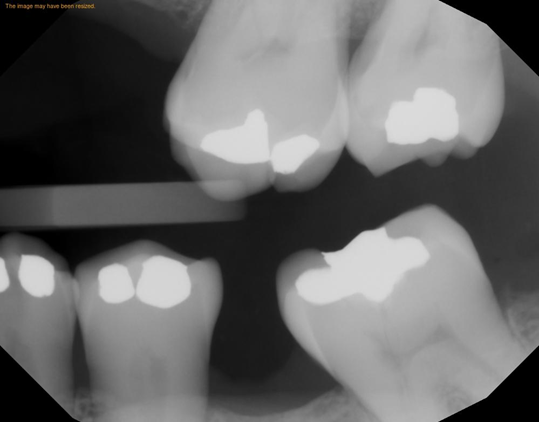
The implication for candidacy: even if a patient has sufficient bone volume, they may not be an implant candidate if there is insufficient space for the crown or restoration at that site. Opposing teeth that have over-erupted into the gap, adjacent teeth that have tilted significantly, or skeletal relationships that don’t allow for correct restoration geometry can all limit or prevent implant placement, regardless of bone quality.
This is assessed during the evaluation through clinical examination, imaging, and in some cases, diagnostic models or digital planning tools. When space issues are identified, we discuss what orthodontic or other preparatory treatment might create the conditions for a successful implant.
Every implant at D&FD is planned on computer using 3D imaging and a prosthetically-driven workflow. A surgical guide is fabricated before placement, so the implant is positioned precisely where the final restoration requires it to be, not where the bone is most convenient.
Keratinized gingiva: when additional soft tissue procedures are needed
Keratinized gingiva, the firm, attached gum tissue that surrounds teeth and implants, plays an important role in the long-term stability of an implant restoration. A minimum band of keratinized tissue around the implant helps prevent recession, reduces inflammation risk, and makes daily oral hygiene significantly more effective at the implant margin.
Insufficient keratinized gingiva is not an absolute disqualifier for implants. However, it does add a surgical step to the treatment plan: a connective tissue graft or a vestibuloplasty procedure is typically recommended to create or augment the keratinized tissue at the implant site before or at the time of placement.
This is assessed during the clinical examination at your evaluation and factored into the treatment plan and timeline if additional soft tissue work is needed.
How D&FD dentists evaluate implant candidacy in Coral Gables and Kendall
Understanding the general criteria is useful. Understanding exactly what happens when you walk into D&FD for an implant evaluation is more useful.
What your $250 implant evaluation includes
Our implant evaluation is a comprehensive clinical appointment, not a brief consultation. The appointment is intentionally scheduled without time pressure. By the end, we have everything we need to give you a complete, accurate treatment plan with transparent pricing, and you have everything you need to make a confident decision.
You’re under no obligation to proceed with anything at this appointment.
Why we always use CBCT for implant planning
Standard X-rays and panoramic images provide useful general information, but they are not sufficient for implant planning at D&FD. A two-dimensional image cannot tell us the actual three-dimensional volume of bone available at the site, the exact proximity of the sinus floor or inferior alveolar nerve, the bone quality in depth, or the precise positioning that the restoration requires.
The CBCT gives us all of this. It is the imaging study that makes prosthetically-driven, computer-guided implant placement possible.
What we assess specifically from the CBCT:
- Bone height: is there enough vertical bone to place the implant without compromising adjacent structures?
- Bone width: is the ridge wide enough to accommodate the implant diameter, and to allow correct prosthetic positioning?
- Bone quality: is the bone dense enough to support primary stability at placement?
- Sinus proximity (upper jaw): how close is the sinus floor, and is a sinus lift required?
- Nerve canal position (lower jaw): where is the inferior alveolar nerve, and what is the safe working distance?
- Restoration requirements: does the available bone allow for the implant position the restoration needs, or is bone grafting required to create that position?
Computer-guided planning and surgical guides: how every implant is placed
Once the evaluation is complete and the treatment plan is confirmed, every implant at D&FD is planned digitally using 3D software that overlays the CBCT data with the digital scan of your teeth and the prosthetic plan. The software allows us to position the implant in three dimensions, with exact depth, angle, and emergence profile, before a single incision is made.
From this digital plan, a surgical guide is fabricated: a custom appliance that fits precisely over your teeth and jaw and guides the surgical instruments to the exact planned position during the procedure. Guided implant placement eliminates the variability that comes with freehand positioning and ensures that the implant is placed where the restoration needs it to be.
This is not an upsell or an optional premium service at D&FD. It is how we place implants. The surgical guide is part of the workflow for every case.
Still unsure whether you qualify? The honest answer
If you’ve read this far and you’re still not sure whether you qualify, here’s the truth: neither are we, until we’ve examined you, reviewed your 3D imaging, assessed your blood work, and understood what your restoration needs to look like.
What we can promise is this: you’ll leave the evaluation appointment knowing exactly where you stand. If implants are right for you, you’ll have a complete treatment plan with transparent pricing. If they’re not the right option right now, or if preparatory treatment is needed first, we’ll tell you why and what the realistic path forward looks like.Book your implant evaluation online at Gables Dental Care (Coral Gables) or EliteDent (Kendall).